Do not allow anything to pass your lips that you are not certain is completely true.
Anyone possessing truth is able to live a more conflict-free life; for as truth brings clarity, so too does it bring purpose and determination. Do not allow anything to pass your lips that you are not certain is completely true. Be a friend of truth and sponsor it.

Meditation

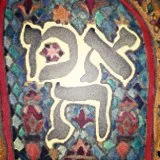
The Hebrew word for truth is emet. Emet translates also as verity and correctness.
Truth can be difficult. It can be difficult to find, and once found it can be difficult to live out. However, we have to have chutzpah.
Daily Questions
What were the "seeds" that started to affect your ability to exemplify truth?
Think of several moments when you were challenged to express truth. What was your reaction? Did you forsake truthfulness for social peace or to prevent embarrassment, or were you weak and not able to stand up for the truth?
If you were unable to express truth today, is this something that you have struggled with previously?
Were you able to use prayer or meditation to give you strength to work through the circumstances?
Featured Articles

When truth encounters the data of our lives, it gives rise to confession. Truth alone can be totally abstract, an ideal that exists apart from the realities of daily life.
The middah of truth is complex. It is not just letting flow off your lips that which is true, or known to be true to you. It is also about the internal ideas of truth you have within you, or think you have within you, and translating that into righteous and honest action.
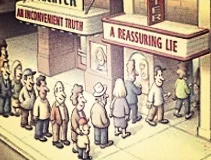
Truth is one of those intangible concepts that are difficult to define. When Yeshua said he bore witness of the truth, Pilate asked him, “What is truth?” It’s a good question. We live in a world where truth is so subjective, that the idea of it becomes almost meaningless.
So we have all been taught from youth to tell the truth. But what about those moments of tattle-taling? Guess what...they are wrong too.
Emet, truth, is composed of three letters: the first, the last, and the middle letters of the Hebrew alephbet. Like a stool, it has a firm foundation.
When truth encounters the data of our lives, it gives rise to confession. Truth alone can be totally abstract, an ideal that exists apart from the realities of daily life.
Preparing to teach or preach Scripture is hard work and Rabbi Leffin’s maxim doesn’t make it any easier: “Do not allow anything to pass your lips that you are not certain is completely true.”
The middah of truth is complex. It is not just letting flow off your lips that which is true, or known to be true to you. It is also about the internal ideas of truth you have within you, or think you have within you, and translating that into righteous and honest action.
The human capacity for self-deception is great. It is arguably even stronger than our capacity to be dishonest with others. Within the safety of our self-deception we can justify all kinds of vices.
The truth is ultimately not just abstract or propositional, but in its highest form is lived out. We see this in the Torah and throughout the whole of Scripture, which teaches us truth not through lists of theological facts or legal stipulations, but primarily through story.
Truth is one of those intangible concepts that are difficult to define. When Yeshua said he bore witness of the truth, Pilate asked him, “What is truth?” It’s a good question. We live in a world where truth is so subjective, that the idea of it becomes almost meaningless.
The Hebrew word for “true”, emet, occurs six times in the concluding portion of the Shema section of shacharit. In fact, it is the first word spoken after the third paragraph of the Shema (Numbers 15).
In Yeshua’s Jewish world, the pursuit of truth was not the highest good so much as the doing of it. Truth was given in the self-disclosure and instruction (torah) of the Holy One of Israel.
At a p’shat level, truth is a middah that expresses itself in the realm of speech. Much Mussar work on truth focuses on guarding the tongue from speaking words that may be false or purposely give another a false impression.
Oath-taking is not such a common practice today, but its lessons are clear: Truth is foundational to ethical behavior. Oath-taking, which is intended as a guardian of truthfulness, ends up weakening it.
As we struggle to know the truth is in our lives and what is our soul-purpose, we sometimes find ourselves cleaving to the examples of others, either present or past.
Sometimes we think we are "networking" when we share information about others. Did you hear about so and so? Oh yes, I can't believe it. What a tragedy.
So we have all been taught from youth to tell the truth. But what about those moments of tattle-taling? Guess what...they are wrong too.
Emet, truth, is composed of three letters: the first, the last, and the middle letters of the Hebrew alephbet. Like a stool, it has a firm foundation.
This story speaks to us of hidden possibilities shrouded in the most mysterious situations. Who would have thought that the beautification of the Temple would come about after the massacre of 300 rabbis?
Quotables
Simeon ben Shetah said: "Examine the witnesses diligently and be cautious in thy words lest through them they learn to falsify." --Avot 1:9
“You shall be sincere with the L-d your G-d.” --Deuteronomy 18:13
“Keep your tongue from evil, and your lips from deceitful speech.” --Psalms 34:14
“Accustom your tongue to say, 'I do not know.'” --Talmud, Berachos 4a
“Correct yourself first, and then you can correct others.” --Talmud, Bava Metzia 107b
“Keep your distance from falsehood.” --Exodus 23:7
“Foolishness is joy to one who lacks [an understanding] heart, but a man of understanding [will rejoice] when he walks uprightly.” --Proverbs 15:21
“Do not offer vain testimony against your fellow, to denar yourself with your lips. Do not say,'As he has done for me, so will I do for him; I will reward the man according to his acts.'” --Proverbs 24:28
“One who deceives his fellow through flattery is spreading a net for his own footsteps.” --Proverbs 29:5