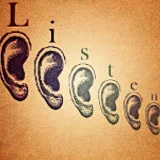
What is hateful to you do not do to your neighbor. -- Rabbi Hillel
The Hebrew word for righteousness is tzedek. Tzedek is almost impossible to translate, because of its many shadings of meaning: justice, charity, righteousness, integrity, equity, fairness and innocence.
Because of this, if we are to have any hope of how to exemplify righteousness in the world in the way that Hashem would desire, then we must have the proper lenses by which to view how we are to act in many situations so as to allow righteousness, or tzedek, to shine.

Meditation

The Hebrew word for righteousness is tzedek. Tzedek is almost impossible to translate, because of its many shadings of meaning: justice, charity, righteousness, integrity, equity, fairness and innocence.
Daily Questions
What were the "seeds" that hindered your ability to manifest righteousness today?
Did a good deed you tried to perform today lift up someone while lowering someone else, or was this good deed mutually beneficial for all involved?
Were your deeds done merely for the sake of Heaven, or for some personal gain?
Did you consider the honor of your fellow in all your actions?
Were you able to use prayer or meditation to help you in making the more noble choices you were confronted with today?
Featured Articles

Righteousness means doing the right thing whether anyone is watching or not (and knowing that there actually is One who is watching all the time), and lining up inwardly with the outward act. Public righteousness should reflect private rightness with Hashem.
Often when we speak of the righteousness of God we conjure up images of perfection. After all, God directed Moses, “Speak to the entire assembly of Israel and say to them: You shall be holy, for holy am I, Hashem your God” (Vayikra 19:2). Unfortunately our efforts often fall short of God’s highest standards and can leave us feeling inadequate.
If we are working for a world to espouse a greater love and service to Hashem, it can only come about through those who are alive: alive in spirit and alive in the flesh. If we crush those around us in an uncaring manner that is strict and so halachically stringent, then we have surely missed the point of observance.
Yeshua tells us, "Unless your righteousness exceeds the righteousness of the scribes and Pharisees, you will by no means enter the kingdom of heaven" (Matt. 5:20). He goes on to show how righteousness, or justice—for tzedek can be translated as either—is defined in Scripture, and revealed in how we treat and think about and respond to those around us.
Righteousness in Hebrew is tzedakah, a word many of us learned at an early age when we were taught to put some money in a pushke to share with those in need. I remember my Shabbat school teacher when I was eight or ten telling us that tzedakah didn’t mean charity, but righteousness or justice.
This story highlights what should have been obvious to the baker: our tradition serves to inform us and uplift us, not uplift itself. The care and honor that the baker showed to the challot should have been bestowed upon his wife.
Righteousness means doing the right thing whether anyone is watching or not (and knowing that there actually is One who is watching all the time), and lining up inwardly with the outward act. Public righteousness should reflect private rightness with Hashem.
Often when we speak of the righteousness of God we conjure up images of perfection. After all, God directed Moses, “Speak to the entire assembly of Israel and say to them: You shall be holy, for holy am I, Hashem your God” (Vayikra 19:2). Unfortunately our efforts often fall short of God’s highest standards and can leave us feeling inadequate.
In the volume, Sefer haMiddot, Rebbe Nachman of Breslov taught that one should give charity (tzedakah) before praying as well as bind oneself to the righteous (tzaddikim) of the generation. In other words, there is a connection between giving charity and cleaving to the righteous, and an interconnection between the performance and reception of righteousness.
It could be asked why Torah study serves as a part of daily davening. Are not learning (Torah) and davening (Avodah) different? Furthermore, aren’t the deeds mentioned in Shabbat 127a more related to acts of loving-kindness (Gemilut Chasidim)?
There is no doubt that Rabbi Salanter was scrupulous in his performance of mitzvot. We read countless stories where he was concerned about the status of the food that he ate, knowing that it would break down, nourish his body, and give him the ability to perform the commandments. He wanted to be fueled with only the best for the sake of Heaven.
If we are working for a world to espouse a greater love and service to Hashem, it can only come about through those who are alive: alive in spirit and alive in the flesh. If we crush those around us in an uncaring manner that is strict and so halachically stringent, then we have surely missed the point of observance.
Yeshua tells us, "Unless your righteousness exceeds the righteousness of the scribes and Pharisees, you will by no means enter the kingdom of heaven" (Matt. 5:20). He goes on to show how righteousness, or justice—for tzedek can be translated as either—is defined in Scripture, and revealed in how we treat and think about and respond to those around us.
For the authors of the ketuvim sh’lichim (Apostolic Writings), righteousness is tied up with the mitzvah of love. Love, for all its repetition in Scripture, is a concept connected to righteousness, which we must keep kindled in our hearts and minds. The prayer of Rav Shaul for the Philippians is paradigmatic:
Righteousness in Hebrew is tzedakah, a word many of us learned at an early age when we were taught to put some money in a pushke to share with those in need. I remember my Shabbat school teacher when I was eight or ten telling us that tzedakah didn’t mean charity, but righteousness or justice.
Rabbi Salanter was washing his hands before a meal when the rabbis he was with noticed he was not immersing his whole hands in water in the ritual manner preferred by Jewish law. When questioned about this practice, Rabbi Salanter responded…
Quotables
Rabbi Judah the Prince said: "Which is the right course that a man should choose for himself? That which is an honor to him and elicits honor from his fellow men." --Avot 2:1
Rabbi Jose said: “Let the property of your fellow man be as dear to you as your own.” --Avot 2:17
But if three have eaten at one table and have spoken over it words of the Torah, it is as if they had eaten from the table of G-d, for it is written (Ezekiel 41.22) 'He said to me, 'This is the table which is before Hashem.' --Avot 3:4
Blessed are those who hunger and thirst for righteousness, for they shall be filled. —Matthew 5:6
A person may tend to deliberate whether he should or should not give tzedakah (charity). That is why the Torah exhorts, 'Do not close your hand to the poor.' --Rashi, Deuteronomy 15:7
“I constantly place the presence of G-d before my eyes” (Psalms 16:8). This is a fundamental rule in Torah and behavior of the righteous who walk in the path of G-d. --Shulchan Aruch Orach Chaim 1:1
Judge every person favorably. – Avot 1:6
A person should be humble and as flexible as Hillel, rather than as stern and strict as Shammai. --Talmud, Shabbos 30b