

“Endurance enlightens the mind and soul.”
Patience is a means not only to inner peace but outer peace. It is the ability to endure situations of all kinds and to remain level-headed. Patience out of balance can appear two ways. One extreme displays frustration, rage, and aggravation, while the other extreme displays apathy and indifference. Patience displayed in balance helps relationships and situations through rough spots and promotes healthy growth.
When you are in a situation and about to lose your temper, recite the memory phrase in your mind before you react.
Plan to be early for all appointments this week and bring a book for the wait.
When frustrated in traffic, have a favorite song handy for cue-up and enjoy the moment.
If you are ready to lose your patience with a person, stop the seeds of impatience and say something kind to that person.
Meditation
Daily Questions

What were the "seeds" that started to erode your patience today?
Think of several good things that happened today. What was your reaction to them in contrast to your moments of challenge?
If you lost your patience today, is this something that you have lost your patience over previously?
If you were on the verge of losing your patience but didn't, what did you employ that worked?
Were you able to use prayer or meditation to suffer through the circumstances?
If you lost your patience today, describe how it happened.
What causes you to lose patience most often?
Featured Articles

 We sometimes think of patience as a passive virtue, similar to endurance; the kind of patience that enables us to perform a repetitive task, to get through setbacks and challenges, or to wait for an answer to prayer without getting irritated or discouraged. Such patience is a virtue, as they say, but patience includes a more active response as well, not just enduring various trials, but maintaining focus and intensity through them all.
 When Joseph saw his brothers, he recognized them; but he acted like a stranger toward them . . . (Gen. 42:7).
 I think I’m a pretty patient guy, but I saw something this week that put my patience to shame.
 Last week I had the privilege of experiencing the removal of all four wisdom teeth and one extra tooth that had grown behind one of my top front teeth. The entire experience has been a test of patience.
 We most often think of patience or savlanut as the capacity to deal with frustrating delays or obstacles that interfere with our plans or objectives.
 Most of us have heard it said, at one point or another, “all good things come to those who wait.” We have also probably heard, “you can’t always get what you want.” For the most part we think of patience in relationship to those things that are eventually coming to us. This week’s parasha (Pinchas) reveals a deeper level of patience.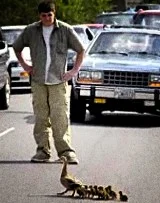
 I’ve heard Patience defined, not as the ability to wait, but as the ability to wait with a good attitude. Patience is a wonderful thing, but no one wants to have it for themselves. We want other people to be patient. The value in patience is that we get to see events unfold and we can gain deeper understandings. Patience is something that is learned. It doesn’t come naturally.




 I was recently stuck in line at the car rental counter behind a guy who appeared to have never rented a car before in his life. I’d say he was a classic nudnik, but I don’t think I should call someone a name in an article about ethics. With shorts a bit too tight and hitched up a bit too high upon his potbelly, and close-cropped gray hair over a worried brow, he questioned every line in the rental agreement.
Quotables

"Woe to the pampered one who has never been trained to be patient. Either today or in the future he is destined to sip from the cup of affliction." -- Rabbi M. M. Leffin, Cheshbon ha-Nefesh
"Slowness to anger [shows] much understanding, but a short-spirited person elevates foolishness." -- Proverbs 14:29 Stone Tanach
"The key to everything is patience. You get the chicken by hatching the egg, not by smashing it." -- Arnold H. Glasgow
"Patience is the ability to idle your motor when you feel like stripping your gears." -- Barbara Johnson
"Patience is not passive; on the contrary, it is active; it is concentrated strength." -- Edward G. Bulwer-Lytton
"Perseverance prevails even against Heaven." -- Talmud, Sanhedrin 105a
"A hot-tempered man stirs up strife, but the slow to anger calms a dispute." -- Mishlei 15:18
"Experience has taught me this, that we undo ourselves by impatience. Misfortunes have their life and their limits, their sickness and their health." -- Michel de Montaigne
"I waited patiently for the LORD; and He inclined to me and heard my cry." -- Tehillim 40:1
"Brothers and sisters, as an example of patience in the face of suffering, take the prophets who spoke in the name of the LORD." -- James 5:10
"Be completely humble and gentle; be patient, bearing with one another in love." -- Ephesians 4:2
Here’s an unoriginal thought: We are an impatient generation.